In today’s hyper-connected digital world, businesses need seamless data flow across platforms. Salesforce integration services unlock powerful automation, real-time insights, and unified customer experiences—transforming how companies operate and grow.
What Are Salesforce Integration Services?

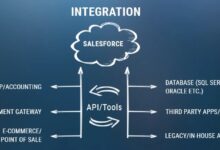
Salesforce integration services refer to the technical processes and solutions that connect Salesforce, the world’s leading Customer Relationship Management (CRM) platform, with other business applications, databases, and systems. These integrations ensure that data flows smoothly between Salesforce and tools like ERP systems, marketing automation platforms, e-commerce stores, customer support software, and more.
The goal is simple: eliminate data silos, reduce manual entry, and provide a 360-degree view of the customer. Whether you’re syncing customer data from an external billing system or pushing sales forecasts into a financial planning tool, Salesforce integration services make it possible.
According to Salesforce’s own State of Sales Report, high-performing sales teams are 1.5x more likely to use integrated CRM systems. This highlights how critical integration is to modern business success.
Why Integration Matters in Modern Business
In the past, departments operated in isolation—sales used one system, marketing another, and finance a third. Today, that model is obsolete. Customers expect personalized, consistent experiences across every touchpoint, and employees need instant access to accurate data.
Integration bridges the gap between disparate systems. For example, when a customer updates their contact information on a company’s website, that change should automatically reflect in Salesforce, the email marketing platform, and the support ticketing system. Without integration, this requires manual updates—time-consuming and error-prone.
Moreover, integration enables automation. When a lead converts in Salesforce, an integrated marketing platform can automatically enroll them in a nurture campaign, while the billing system creates an invoice. This level of orchestration is only possible with robust Salesforce integration services.
Types of Salesforce Integrations
There are several types of Salesforce integrations, each serving different business needs:
- Application Integration: Connecting Salesforce with third-party apps like Slack, Mailchimp, or Shopify.
- Data Integration: Syncing customer, product, or transactional data between Salesforce and external databases or data warehouses.
- Process Integration: Automating workflows across systems, such as triggering a service case when a product return is logged in an e-commerce platform.
- API-Based Integration: Using REST or SOAP APIs to enable real-time communication between Salesforce and other systems.
- Event-Driven Integration: Reacting to specific events (e.g., a new opportunity closed) by triggering actions in other systems.
Each type requires different tools and strategies, but all aim to create a unified, responsive business ecosystem.
“Integration is no longer a luxury—it’s a necessity for any business that wants to scale efficiently and deliver exceptional customer experiences.” — Gartner Research
Top 7 Benefits of Salesforce Integration Services
Leveraging Salesforce integration services offers transformative advantages. From boosting productivity to enhancing decision-making, the benefits are both immediate and long-term. Let’s explore the seven most impactful benefits that organizations gain when they invest in smart, scalable integrations.
1. Unified Customer View Across Departments
One of the most powerful outcomes of Salesforce integration services is a single, unified view of the customer. When sales, service, marketing, and finance teams all access the same real-time data, collaboration improves dramatically.
For example, when a customer service agent can see not only the support history but also the latest sales interactions and marketing engagements, they can provide more personalized and effective support. This holistic view reduces friction, increases customer satisfaction, and strengthens loyalty.
According to a McKinsey study, companies with integrated customer data report up to 30% higher customer satisfaction scores.
2. Increased Operational Efficiency
Manual data entry is not only tedious but also a major source of errors. Salesforce integration services automate data transfer between systems, eliminating redundant tasks and reducing human error.
Imagine a sales rep no longer having to copy-paste order details from an e-commerce platform into Salesforce. Or a finance team that no longer needs to export CSV files from Salesforce to import into their accounting software. Automation through integration saves hours every week, allowing employees to focus on higher-value activities.
A report by Nucleus Research found that businesses using integrated CRM systems achieve an average of $8.71 return for every dollar spent—largely due to efficiency gains.
3. Real-Time Data Synchronization
Outdated data leads to poor decisions. Salesforce integration services ensure that information is synchronized in real time across all connected systems.
For instance, when a customer updates their shipping address on a mobile app, that change instantly reflects in Salesforce, the warehouse management system, and the delivery tracking platform. This real-time sync prevents shipping errors, improves delivery times, and enhances the overall customer experience.
Real-time integration is especially critical in industries like retail, healthcare, and logistics, where timing and accuracy are paramount.
4. Enhanced Analytics and Business Intelligence
Data is only valuable when it’s actionable. Salesforce integration services enable organizations to consolidate data from multiple sources into a single analytics environment.
By integrating Salesforce with tools like Tableau, Power BI, or Google Analytics, businesses can create comprehensive dashboards that show sales performance, customer behavior, marketing ROI, and operational KPIs—all in one place.
This holistic analytics capability allows leaders to make faster, data-driven decisions. For example, if marketing data shows a spike in engagement but Salesforce shows no corresponding increase in leads, the team can quickly investigate and adjust their strategy.
5. Improved Sales and Marketing Alignment
One of the most common business challenges is the disconnect between sales and marketing teams. Salesforce integration services help bridge this gap by aligning lead management, campaign tracking, and performance reporting.
When marketing automation platforms like HubSpot or Marketo are integrated with Salesforce, every lead’s journey—from first click to closed deal—is tracked seamlessly. Marketing can see which campaigns generate the most qualified leads, while sales can access rich context about each prospect.
This alignment leads to better lead nurturing, shorter sales cycles, and higher conversion rates. A HubSpot State of Inbound report found that companies with tightly aligned sales and marketing teams achieve 36% higher customer retention and 38% higher sales win rates.
6. Scalability and Future-Proofing
As businesses grow, their technology stack becomes more complex. Salesforce integration services provide the flexibility to scale operations without overhauling existing systems.
Whether you’re adding a new e-commerce platform, expanding into new markets, or acquiring another company, integration ensures that new tools can be connected quickly and securely. This agility is crucial for staying competitive in fast-moving industries.
Moreover, modern integration platforms like MuleSoft (a Salesforce company) offer pre-built connectors and APIs that reduce development time and lower maintenance costs—making it easier to adapt to future needs.
7. Strengthened Data Security and Compliance
Integrating systems doesn’t mean compromising security. In fact, well-designed Salesforce integration services enhance data governance by centralizing access controls, audit trails, and compliance monitoring.
For example, when Salesforce is integrated with an identity management system like Okta, user authentication and permissions can be managed centrally. This reduces the risk of unauthorized access and ensures compliance with regulations like GDPR, HIPAA, or CCPA.
Additionally, integration platforms often include encryption, logging, and monitoring features that help organizations meet strict data protection standards.
Common Use Cases for Salesforce Integration Services
Salesforce integration services are not one-size-fits-all. Different industries and departments have unique needs. Below are some of the most common and impactful use cases across various business functions.
Sales Team: Syncing with Email and Calendar Tools
Sales professionals rely heavily on email and scheduling. Integrating Salesforce with tools like Gmail, Outlook, and Google Calendar ensures that every email, meeting, and follow-up is automatically logged in the CRM.
This eliminates manual entry and provides managers with accurate activity reports. Tools like Cirrus Insight and Mailchimp for Salesforce enable bi-directional sync, so reps can log calls and send tracked emails directly from their inbox.
The result? Higher productivity, better pipeline visibility, and improved coaching opportunities.
Marketing Team: Connecting with Campaign Management Platforms
Marketing teams use platforms like Mailchimp, Pardot, or HubSpot to run email campaigns, manage landing pages, and track engagement. Integrating these with Salesforce ensures that lead behavior is captured in real time.
For example, when a lead downloads a whitepaper, that action is recorded in Salesforce, triggering a follow-up task for the sales team. This closed-loop marketing approach improves lead scoring, nurtures prospects more effectively, and increases conversion rates.
Pardot, Salesforce’s native marketing automation tool, offers deep integration capabilities out of the box, making it a popular choice for B2B marketers.
Customer Service: Integrating with Support and Chat Systems
Today’s customers expect fast, personalized support across multiple channels. Salesforce integration services allow service teams to connect Salesforce with helpdesk platforms like Zendesk, Freshdesk, or Intercom.
When a customer initiates a chat, the agent can instantly pull up their entire history—past purchases, support tickets, and communication logs—directly within the chat interface. This context enables faster resolution and a more satisfying customer experience.
Additionally, integrating with AI-powered chatbots can automate routine inquiries, freeing up human agents for complex issues.
Key Technologies and Tools for Salesforce Integration
Successful Salesforce integration services rely on the right mix of platforms, APIs, and middleware. Understanding the available tools is essential for choosing the best approach for your business.
MuleSoft: The #1 Integration Platform
MuleSoft, acquired by Salesforce in 2018, is the leading integration platform for connecting Salesforce with other systems. Its Anypoint Platform provides a comprehensive suite of tools for API management, data integration, and workflow automation.
With MuleSoft, businesses can create reusable APIs that connect Salesforce to ERP systems like SAP or Oracle, e-commerce platforms like Shopify, and custom legacy applications. Its visual design interface makes it accessible to both developers and business analysts.
According to MuleSoft’s Connectivity Benchmark Report, organizations using integration platforms reduce integration project time by up to 60%.
Heroku: For Custom App Integration
Heroku, another Salesforce-owned platform, is a cloud-based application runtime environment ideal for building custom apps that integrate with Salesforce.
For example, a company might develop a custom field service app on Heroku that pulls customer data from Salesforce and pushes work orders back in real time. Heroku’s flexibility and scalability make it perfect for innovative use cases that go beyond standard integration tools.
Developers appreciate Heroku’s support for multiple programming languages and its seamless deployment pipeline.
Native Salesforce Tools: Process Builder and Flow
Salesforce offers built-in tools like Process Builder and Flow that allow users to automate workflows and integrate data within the platform.
While these tools are not designed for external system integration, they are powerful for orchestrating internal processes. For example, you can use Flow to automatically update a lead’s status when a marketing email is opened, or send a notification when a case is escalated.
When combined with external integration platforms, native tools create a complete automation ecosystem.
Choosing the Right Salesforce Integration Services Provider
Not all integration providers are created equal. Selecting the right partner can mean the difference between a smooth, scalable solution and a costly, fragile one.
What to Look for in a Provider
When evaluating Salesforce integration services providers, consider the following criteria:
- Proven Expertise: Look for partners with certified Salesforce architects and developers.
- Industry Experience: Choose a provider familiar with your sector’s compliance and operational needs.
- Technology Stack: Ensure they use modern tools like MuleSoft, Boomi, or Informatica.
- Support and Maintenance: Integration is not a one-time project—ongoing support is crucial.
- Customer References: Ask for case studies or testimonials from similar clients.
A strong provider will offer a discovery phase to understand your goals, map your data flows, and recommend the best integration architecture.
Red Flags to Avoid
Be cautious of providers who:
- Promise “one-size-fits-all” solutions without assessing your needs.
- Use outdated integration methods like batch file transfers.
- Don’t provide clear documentation or training.
- Fail to address security and compliance requirements.
- Offer unrealistically low prices—often a sign of cutting corners.
Remember, integration is a strategic investment. Choosing the wrong partner can lead to data corruption, system downtime, and lost productivity.
Best Practices for Implementing Salesforce Integration Services
Successful integration requires more than just technical know-how. It demands careful planning, stakeholder alignment, and ongoing optimization.
Start with a Clear Strategy
Before writing a single line of code, define your integration goals. Ask: What problems are we solving? Which systems need to talk to each other? What data should be shared?
Create a data flow diagram that maps out how information moves between systems. This visual guide helps align teams and prevents scope creep.
Also, prioritize integrations based on business impact. Start with high-value, low-complexity projects—like syncing Salesforce with your email platform—before tackling enterprise-wide ERP integrations.
Ensure Data Quality and Governance
Poor data quality undermines even the best integration. Before connecting systems, clean your data: remove duplicates, standardize formats, and validate entries.
Establish data governance policies that define who owns data, how it’s updated, and who has access. This prevents conflicts and ensures consistency across systems.
Tools like Salesforce Data Loader and third-party data quality platforms can help automate this process.
Test Thoroughly Before Going Live
Never deploy an integration directly into production. Use a sandbox environment to test every scenario, including edge cases and error conditions.
For example, what happens if a record fails to sync? Does the system retry? Is there an alert? Testing these scenarios ensures reliability and minimizes disruptions.
Involve end-users in user acceptance testing (UAT) to gather feedback and catch usability issues early.
Future Trends in Salesforce Integration Services
The landscape of Salesforce integration services is evolving rapidly, driven by advances in AI, cloud computing, and low-code development.
AI-Powered Integration
Artificial intelligence is transforming integration by enabling predictive data mapping, anomaly detection, and self-healing workflows.
For example, Einstein AI in Salesforce can suggest field mappings during integration setup, reducing configuration time. AI can also monitor data flows and alert administrators to inconsistencies or performance issues.
In the future, AI-driven integration platforms may automatically detect new data sources and propose optimal connection strategies.
Low-Code and No-Code Integration
Low-code and no-code platforms are empowering business users to build integrations without deep technical skills.
Tools like Salesforce Flow, MuleSoft Composer, and Zapier allow non-developers to create simple integrations using drag-and-drop interfaces. This accelerates innovation and reduces dependency on IT teams.
However, governance is essential—uncontrolled integration can lead to data sprawl and security risks.
Event-Driven and Real-Time Architectures
The future of integration is real-time. Event-driven architectures, where systems react instantly to changes, are becoming the standard.
Salesforce’s Platform Events and Change Data Capture (CDC) features enable developers to build responsive, event-based integrations. For example, when a customer’s subscription is canceled, an event can trigger immediate actions in billing, support, and marketing systems.
This shift enables businesses to be more agile, proactive, and customer-centric.
What are Salesforce integration services?
Salesforce integration services are solutions that connect Salesforce with other business applications—such as ERP, marketing, or support systems—to enable seamless data flow, automate processes, and provide a unified view of customer information across platforms.
Why do I need Salesforce integration services?
You need Salesforce integration services to eliminate data silos, reduce manual work, improve data accuracy, enhance customer experiences, and make faster, data-driven decisions. Integrated systems lead to higher productivity and better business outcomes.
What are the most common tools used for Salesforce integration?
The most common tools include MuleSoft (Salesforce’s integration platform), Heroku for custom apps, native tools like Process Builder and Flow, and third-party platforms like Boomi, Informatica, and Zapier.
How long does a Salesforce integration project take?
The duration varies based on complexity. Simple integrations (e.g., email sync) can take a few days, while enterprise-wide integrations (e.g., ERP + Salesforce) may take several months. A clear strategy and experienced provider can accelerate the process.
Are Salesforce integrations secure?
Yes, when implemented correctly. Salesforce integration services use secure protocols like OAuth, TLS encryption, and API gateways. Choosing a reputable provider and following best practices ensures data protection and compliance with regulations.
In conclusion, Salesforce integration services are no longer optional—they are a strategic imperative for businesses aiming to thrive in the digital age. From creating a unified customer view to driving operational efficiency and enabling real-time decision-making, the benefits are profound. By leveraging the right tools, choosing a trusted provider, and following best practices, organizations can unlock the full potential of their Salesforce investment. As technology evolves, embracing trends like AI, low-code, and event-driven integration will ensure long-term agility and competitiveness.
Further Reading:
